
Back in December, I stumbled across an article online that the Alabama State Defense Force had been stood down. Having once been an officer in the ASDF, I was a bit disappointed to hear that. Being a bit of a militia advocate, I’ve commented on “militias” at various points on this site, and I used to maintain, as “signal officer”, the website of Company C, 103rd BN, 1st Infantry BDE, ASDF (the site is defunct now, and the Way Back Machine didn’t capture snapshots when I was listed on it).
I’ll not be so harsh as to claim that “Alabama bureaucrats squander away Alabama State Defense Force” the way the article I am referencing did, because I can sort of see why the ASDF was stood down. My experience was, that while those who volunteered sincerely wanted to be of service, the ASDF either was not given, or did not have, the capacity to be effective. And to be honest, having been honorably served in the Armed Forces, I wasn’t comfortable being a uniformed militiaman in public. Having served, I wasn’t a wannabee, and I didn’t want to be confused for a has-been. We also weren’t doing things that I thought were the most effective use of my time. I was interested in the historic notion of a militia, and not the quasi search and rescue role it was being used for.
All this led me to write a letter Governor Bentley to express my concern in the matter. I wish I had saved my correspondence, but to paraphrase, it was something to the effect of sadness that it had been stood down, an understanding of why it might have been based on my experience, and my hope that the goal was to effectively reorganize it.
To my delight, I received this response from the Governor today:
January 8, 2014
Dear Mr. Blevins:
Thank you for your letter which I received today regarding the Alabama State Defense Force (ASDF).
Since its creation in 1983, the ASDF has been a part of the Alabama Military Department under the Adjutant General. For the past several years, the ASDF has been informally transitioning from its original role as a replacement for the National Guard in the event of a full National Guard mobilization to the more relevant role of a disaster response augmentation element of the National Guard. The ASDF’s Cold War era structure, their low strength numbers, and other challenges have hindered this important transition.
In September of 2013, the Adjutant General made the decision to formalize the transition of the ASDF to maximize the organization’s utility to the National Guard and minimize liability to the state. This will ensure the organization is organized in line with the needs of the Alabama Military Department and best postured to help meet the potential needs of the state. The first step in this process was to stand down the old organization while adjustments to the structure, mission, and manning of the future organization are carefully staffed. The ASDF has not been abolished or disbanded. Current members of the ASDF are in an “inactive” status until the future structure, mission and manning of ASDF are determined.
Again, thank you for your interest in the ASDF. We appreciate all the patriotic Alabamians whom volunteer to serve in the Alabama National Guard and the ASDF.
Sincerely,
Robert Bentley
Governor
RB/pb/sw
This is the response I was hoping to see. It tells me that the ASDF is taken seriously, and that an honest evaluation was made of its current organization. I hope the Adjutant General, MG Perry G. Smith, is able to reorg the ASDF into a viable, and valuable, service to the State of Alabama.
UPDATE (December 6, 2021):
It’s been some years since I created this post, and occasionally, I’ll revisit things I’ve written to provide updates. To date, the ASDF remains in an inactive status, but due to political matters currently occurring, there might be a trend of seeing State Defense Forces across the Country reactivated as a way to defend states rights and the right to self-determination.
One such scenario is currently making headlines in Florida. Governor Ron DeSantis made the following statement on Twitter recently:
I am proposing more than $100 million for our National Guard, active-duty military and veterans, and to re-establish the Florida State Guard to assist our National Guard in state-specific emergencies.
I am committed to supporting our military and keeping our state safe.
— Ron DeSantis (@GovRonDeSantis) December 2, 2021
Law Enforcement Today has an interesting article that goes into more detail. Might the citizens of Alabama see a similar action from Governor Kay Ivey? It is my opinion that she doesn’t take lead in this sort of matter, but should the neighboring states reach a consensus opinion on the matter, I could see her taking similar action in Alabama.
UPDATE (January 6, 2026): A decade later: why this question still lingers
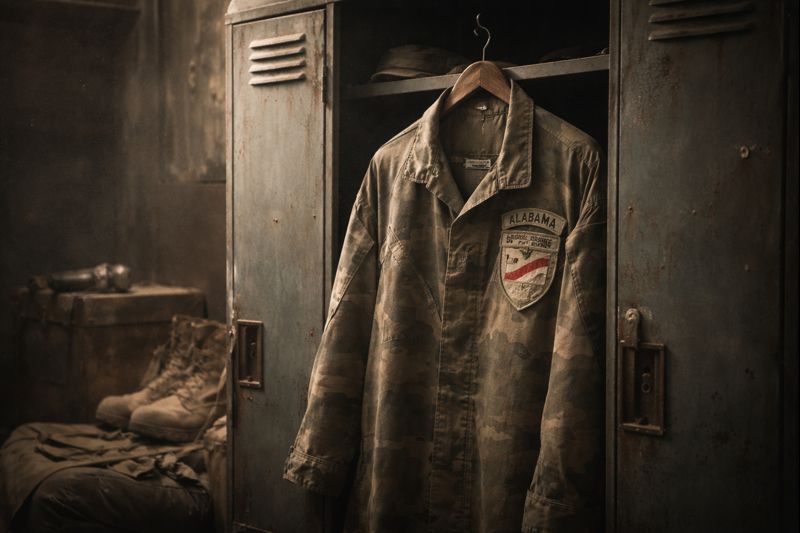
When I wrote this in 2014, the Alabama State Defense Force already felt like a legal ghost: authorized in statute, remembered by a few veterans, but absent from the state’s real emergency posture. A decade later, that has not changed in the narrow administrative sense. The ASDF has not been reactivated. No recruiting. No training pipeline. No operational footprint.
What has changed is my confidence in the systems we assume will save us.
Somewhere along the way I have found myself less convinced that large, centralized responses arrive when we most need them, and more impressed by small, stubborn groups of neighbors who simply go. I did not mean for the Cajun Navy to become a touchstone, but it has. Not because it was perfect, but because it worked before anyone could tell it not to. While agencies were still organizing spreadsheets and liability waivers, people were already on the water.
That contrast has stayed with me.
At the same time, many of Alabama’s neighbors have quietly moved in the opposite direction. Florida formally reactivated and funded its State Guard. Texas, Georgia, Virginia, South Carolina, Tennessee, and others continue to maintain active State Defense Forces that are integrated into their emergency management systems. These are not ceremonial units. They show up for hurricanes, floods, communications failures, logistics breakdowns, and shelter operations. They exist to provide immediate state-level capacity when the National Guard is stretched thin or federally deployed.
Alabama, by contrast, still maintains the legal fiction of a defense force without the institutional reality.
On paper this looks like a bureaucratic footnote. It has begun to feel, at least to me, like something more important is missing. FEMA is designed for scale, compliance, and reimbursement. The National Guard is designed for disciplined force, but it is expensive and often elsewhere. The Cajun Navy is designed for speed and moral urgency, but it lives in a legal gray zone.
A State Defense Force sits in the narrow space where those three almost meet.
It would not replace volunteer energy. It would give it a spine: background checks, communications, incident command training, liability coverage, and a governor’s legal authority. It would allow people who already want to help to do so inside a structure that can talk to 911 centers, emergency managers, and the Guard without being told to stand down for lack of paperwork.
From a cost standpoint, the logic remains almost embarrassingly simple. SDFs are volunteer forces. They train part-time. They bring civilian skills with them — EMTs, radio operators, engineers, cyber specialists, logisticians. The state supplies organization, vetting, and coordination. In return it gains hundreds of trained responders who cannot be federalized and who answer only to Alabama’s governor.
That last point is easy to miss until it matters. When the National Guard deploys overseas or is pulled into national missions, a State Defense Force stays home. It is, by design, what remains when everything else leaves.
Florida, Georgia, Tennessee, Texas, Louisiana, Mississippi, South Carolina, and Virginia have all accepted this quietly. Alabama has not. We continue to rely on either federal arrival or spontaneous volunteerism, with nothing institutional between them. It has begun to feel uncomfortably like we are leaning on luck where we once leaned on structure.
A decade ago I thought the ASDF was a historical curiosity — a leftover from another era’s anxieties. Lately it has started to feel more like an unanswered question. Not because the past is calling us back, but because the future keeps finding new ways to test whether we are actually prepared — and I am no longer sure what our silence about the ASDF says about us.

Just found your post today.
As an addendum: on 14 March 2014, the Alabama State Defense Force was ordered deactivated and disbanded by The Adjutant General of Alabama, MG Perry Smith.
Thanks for the update! I had not seen that information.
Although the alabama state defense force is no longer active, and have been disassembled, we have a viable alternate organization that also operates along the military structure concerning organization and rank., We are the ALABAMA VOLUNTEERS, still careing…still serving!! We are statewide, and membership is open to all persons, male and female age 18 and above, high school to professionals. We have positions available to you in Huntsville, Birmingham, Montgomery and Mobile…We try to assign volunteers to a Brigade nearest their homes. We are non-paid volunteers. Prior military experience not a requirement for membership. Statewide recruiting hq is POB 232, Fruithurst, Ala 36262…or 770-485-6267…0r [email protected]. We need you to help us to help the citizens during times of natural and made made disasters, and/or civil disturbances. Welcome aboard!!
Thanks for that information.
Sir,
My family and I have made our move to the Huntsville area. I am interested in contacting you about the Alabama Volunteers. Please contactvia my e-maill address.
thank you
Scott Gamache
After visiting the Georgia facility this morning, as a Alabamian I am interested in the ASDF . I currently live in North Alabama in the Huntsville area. If you would like to contact me to discuss volunteering my information is below. Phone 256-606-8505.
I would like to join.
After some research, I have a meeting with a Col in the Alabama Service Corp to learn more. From what I understand, they used to be considered the Alabama Defense Service.
I also hear they severely understaffed and really need new blood. I’m prior Air Force and would love the opportunity to serve in some capacity for the greater good, again. It’s voluntary, but I don’t need a paycheck.
I’ll update this comment later for those interested in learning more. I’ve already recruited two other veterans to go along with me. Both are eager to serve, again, too!
Throughout 2019 and 2020 I had multiple meetings with members of Gov Ivey’s cabinet and general staff of members of the Alabama National Guard. The intent of these meeting was to revitalize the Alabama State Defense Force by absorbing vetted and willing participants in the Modern Militia Movement.
For those who don’t recall, the conservative militia movement at that time had a very robust following, and especially in the Southeastern United States many of these groups were regularly actively training, coordinating and communicating with each other, and most of their leadership were veterans.
I was a leader in one of the larger groups, and a cop, veteran, and Honorary Colonel in the State Milita. And over the years I had adapted our groups image from a survivalist prepper militia into a community emergency response task force with training and equipment similar to what a non-profit church group would deploy with following a tornado or hurricane outbreak. I was very close to convincing Gov. Ivey the Alabama State Defense Force had the oversight ability to take control of an army of willing volunteers already training and equipped across the state, who only needed direction and organization, and the government’s blessing to act in the event of an emergency.
Unfortunately, January 6th, 2021, happened. Days after all of America saw an army of conservatives swarm the streets of the capitol Montgomery, Alabama stopped answering my calls. About a week after Jan 6, I had agents from the State Bureau of Investigation and the FBI approach me and strongly advise me that if I wanted to continue my career in law enforcement, I should retire my career in the militia.
I worked hard to organize all of our unorganized militias across the state into a single state defense force. And I am ashamed I failed in my endeavor.