When settlers pushed into the Tennessee frontier, they weren’t the first to chart the land — the Cherokee had been here for centuries, and their story intersects with the Blevins family in ways both documented and legendary. In tracing the life — or perhaps lives — of William Blevins, father and son, it’s worth stepping beyond family lore and frontier exploits to examine this larger context. This post explores where Blevins family activity meets documented Cherokee history, from deeds and treaties to oral traditions. The goal is not to assert lineage, nor to dismiss stories passed down through generations, but to place legend and record side by side and see what survives careful scrutiny.
Cherokee Presence and Territory — Setting the Stage
Before European settlement, the Cherokee occupied vast lands spanning present-day Tennessee, North Carolina, Georgia, and Kentucky. Their claims were rooted in centuries of stewardship and long-established patterns of occupation.
As longhunters and settlers pushed westward in the 1700s, they increasingly entered Cherokee territory. Northeastern Tennessee — along the Watauga, Holston, and Nolichucky rivers — became a hub of early colonial settlement, often under informal leases or occupation. Understanding this context reframes the Blevins “Long Hunts” as more than adventurous excursions: they were part of a broader story of colonial expansion into lands long stewarded by the Cherokee.
Documented Interactions: The Watauga Purchase of 1775
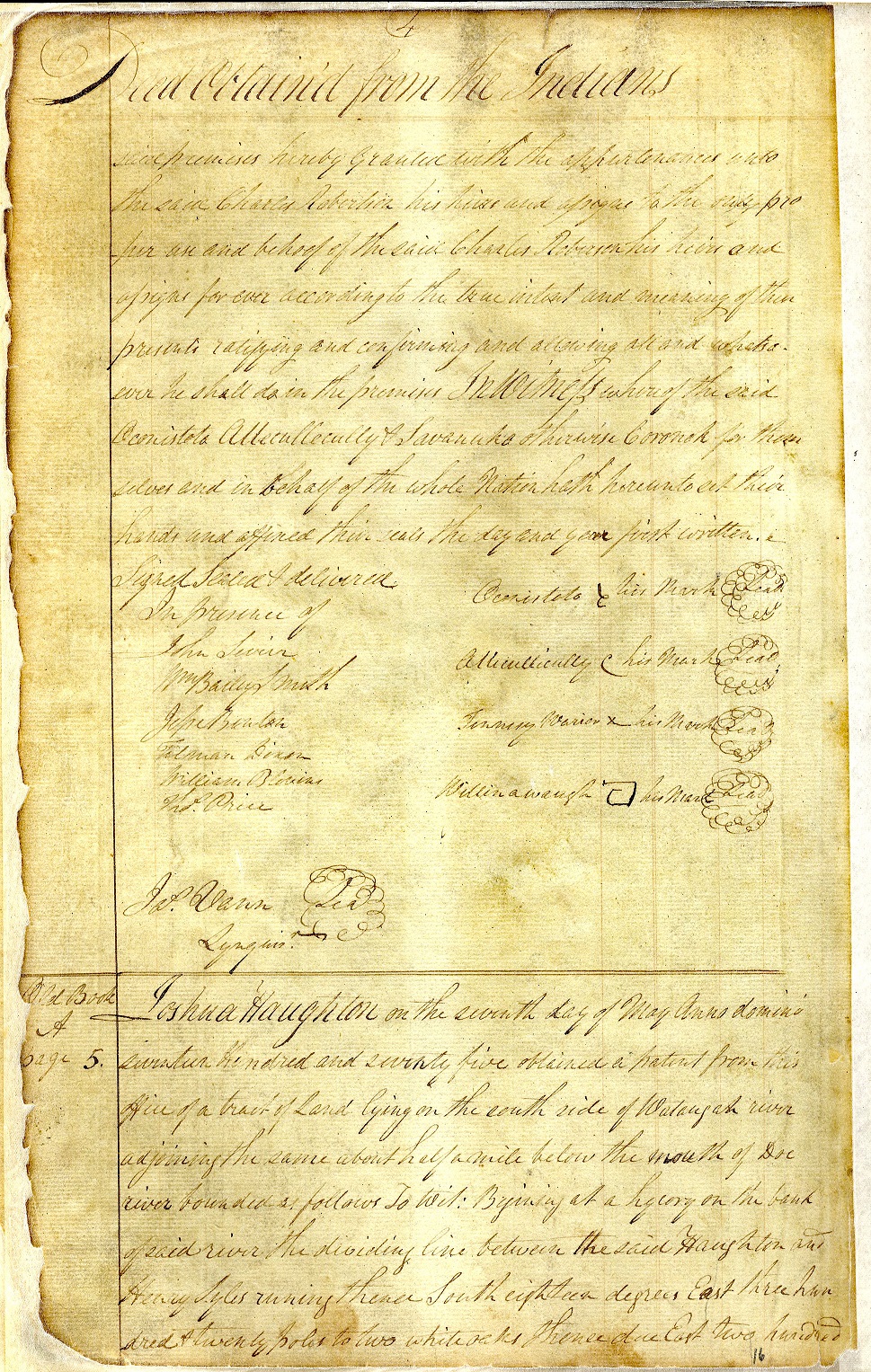
A pivotal moment came on March 19, 1775, at Sycamore Shoals. In the Watauga Purchase, Cherokee chiefs — including Oconostoto, Attacullaculla, and Savanucah — conveyed a large tract of land to Charles Robertson on behalf of the settlers, receiving “two thousand pounds lawful money of Great Britain.1”. You can also read the text in my earlier Long Hunter post. This purchase would amount to $418,225.03 USD at the time of this writing (2025)2. Images of the record of the Watauga purchase can be viewed on the Tennessee Virtual Archive3. The deed acknowledges the Cherokee as “Aborigines and sole owners by occupancy from the beginning of time” and defines the territory using natural landmarks like watersheds, ridges, and the Blue Ridge line.
This transaction marked the transition of many settlers from lease or informal occupation to formal, deed‑based ownership. The records finalizing this purchase, along with many subsequent land grants and patents, are preserved in what became known as Deed Book A — the first deed book of what would become Washington County, Tennessee4.
Because the 1775 deed acknowledges Cherokee ownership by “occupancy from the beginning of time,” the transaction stands as one of those rare frontier moments when Native title was formally recognized—however briefly—and transferred through negotiation rather than sheer encroachment. Yet that acknowledgment existed alongside growing internal strain. In the decades that followed, especially after the Chickamauga faction broke from the elder leadership, the Cherokee Nation began tightening its own laws to protect what remained of its territory5. By 1829, the Nation imposed the death penalty on Cherokees who illegally sold land6, a stark reminder that earlier sales and treaties had not only carved away large portions of Cherokee country but also stirred deep debates within the Nation about sovereignty, survival, and who had the authority to speak for the people.
Which William Blevins? — The Challenge of Names
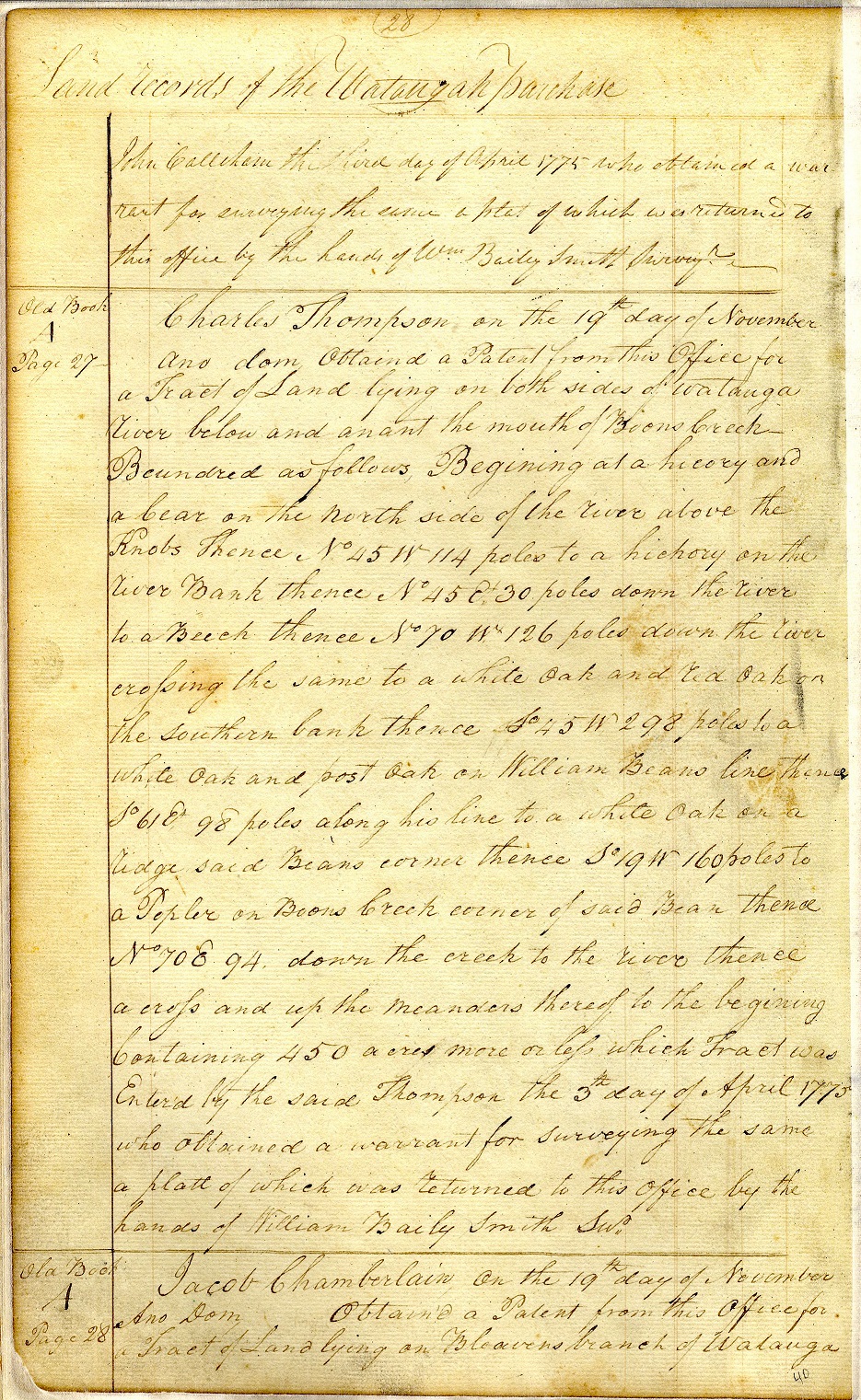
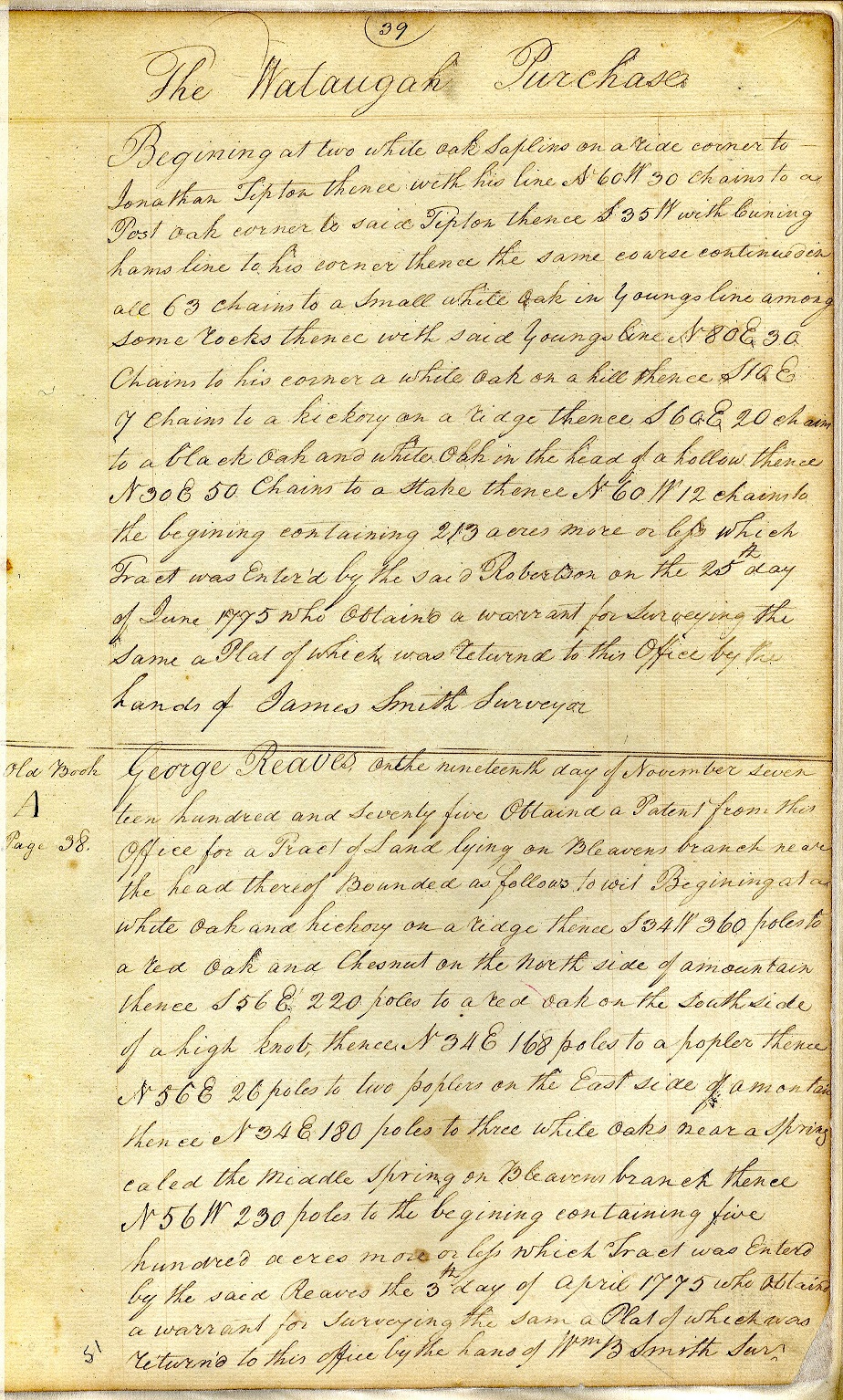
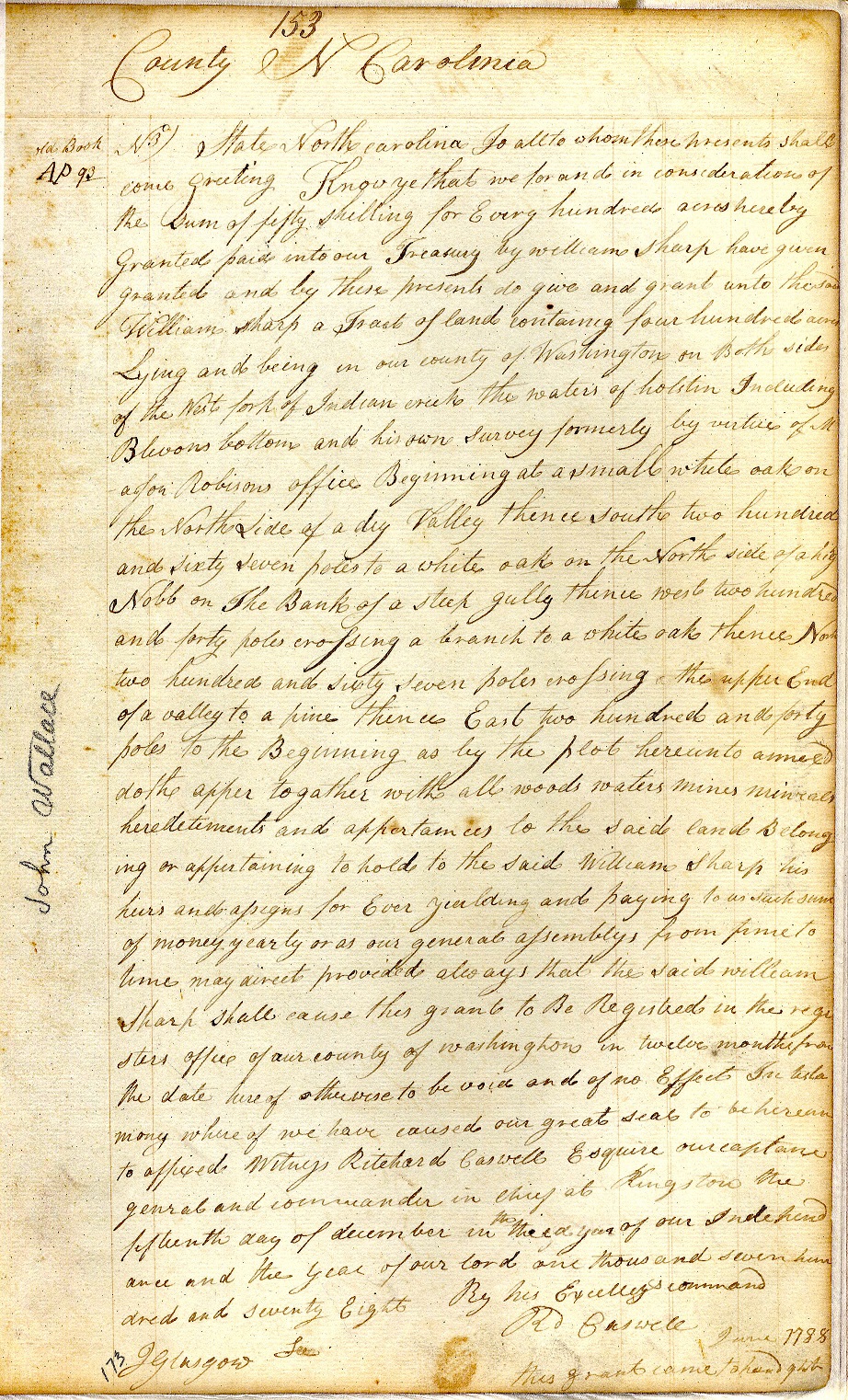
Multiple men named William Blevins were active on the frontier, making it difficult to assign deeds and landholdings with certainty. Deed Book A lists a “Blevins, William — p. 4 — 19 Mar 1775 — signed as witness,” confirming presence at the Sycamore Shoals event, though not explicitly tying him to a specific tract7. The other Blevins-related entries — Bleaven’s Spring (p. 28)8, Blevins Branch (pp. 28, 39)9, and Blevans Bottom (p. 153)10 — are geographic references appearing in adjoining deed descriptions rather than clear grants to a specific man surnamed Blevins. Taken together, these traces show the family moving in the earliest wave of settlement, but they stop short of proving which William Blevins held land in his own name at that moment.
Earlier activity in Virginia adds another layer. Henry County Deed Books I and II (1776–1784) record a William Blevins, Sr. conveying 125 acres originally patented in 1756. Southwestern Virginia deeds from 1765 and 1771 further show a multi-generational pattern of settlement that anticipates the move into Tennessee. These records provide context but stop short of conclusively linking either William Blevins to the 1775 purchase11. A 1765 deed from William and Agnathy (Agnes) Blevins selling 125 acres in Halifax County, VA, and a 1771 indenture involving a younger William Blevins on Marrowbone Creek in Pittsylvania County12. These land transactions indicate that the Blevins family maintained established holdings in Virginia well before venturing into the western frontier, providing both a geographic and generational bridge to later settlement in Tennessee.
Cherokee Treaties, Land Cessions, and Loss of Territory
The Watauga Purchase was part of a larger wave of land transfers that reshaped Cherokee territory. Other deals, such as the Transylvania Purchase, expanded settler claims while the Watauga Association established self-government over lands that had once belonged to the Cherokee13. For the Cherokee, these transactions, treaties, and subsequent cessions marked a dramatic contraction of their lands and upheaval of communities. In this broader historical arc, the Blevins family’s frontier presence is not just a story of hunting and settlement, but a glimpse of the forces reshaping the Cherokee world.
Family Lore and the Legend of “Princess Cornblossom”
Southern families often carry stories linking them to the Cherokee — the Blevins included. The legend of “Princess Cornblossom” is one of these, and while we cannot verify such narratives with archival records, the historical context makes their plausibility understandable. Family lore deserves acknowledgment, carefully bracketed with phrases like “according to family tradition” or “oral history holds that…” The story of “Old Bill” Blevins, alleged to have kept a mistress on his property, reminds us how legend and documentation often intertwine in complex, human ways.
Tentative Observations on Blevins-Cherokee Connections
The 1775 Watauga Purchase confirms a moment when Cherokee leaders formally transferred land to settlers. Whether a William Blevins witnessed, participated, or later acquired land remains uncertain. Yet the presence of Blevins family lore alongside formal deeds offers an opportunity: to respect tradition, pursue archival research, and hold both record and legend in view. Genealogy works best when it honors possibility without overstepping the evidence. In a future post, I’ll explore some of the documented Blevinses that are on later Cherokee membership roles, although I have no reason to believe that these later Blevinses are from my particular line. They do show, however, that there were intermarriages between Cherokees and the Welsh-descended Blevinses.
Conclusion: Intersections of Land, Legacy, and Memory
The story of the Blevins longhunters is about more than daring or acreage. It’s about the people whose lives were entwined with frontier expansion — the Cherokee Nation whose lands and communities were altered forever, and the settlers whose paths crossed them. Family legends, deeds, and treaties together form a mosaic that is never complete, but rich with meaning.
For descendants and historians alike, the lesson is clear: approach genealogy with curiosity and humility. Documented records provide anchors in history, while oral traditions illuminate the spaces between. Both, considered together, offer a fuller, more human view of the past — one where land, legacy, and memory collide.
References
- https://tsla.tnsosfiles.com/digital/teva/transcripts/33636.pdf ↩︎
- https://www.uwyo.edu/numimage/currency.htm ↩︎
- https://teva.contentdm.oclc.org/digital/collection/tfd/id/776 ↩︎
- https://wctnarchives.org/deed-book-a-2 ↩︎
- https://www.nativehistoryassociation.org/dragging_canoe.php ↩︎
- https://www.wcu.edu/library/DigitalCollections/CherokeePhoenix/Vol2/no40/note-this-page-is-set-in-three-large-columns-page-4-column-1a-3b.html ↩︎
- https://wctnarchives.org/wp-content/uploads/2024/07/dba_004-1.jpg ↩︎
- https://wctnarchives.org/wp-content/uploads/2024/07/dba_028-1.jpg ↩︎
- https://wctnarchives.org/wp-content/uploads/2024/07/dba_039-1.jpg ↩︎
- https://wctnarchives.org/wp-content/uploads/2024/07/dba_153-1.jpg ↩︎
- https://docslib.org/doc/13686608/Henry-County-Virginia-Deeds ↩︎
- https://www.anamericanfamilyhistory.com/TennesseeFamilies%26Places/Blevins%20Family/Blevins%2C%20William%201718.html ↩︎
- https://tennesseeencyclopedia.net/entries/transylvania-purchase/ ↩︎
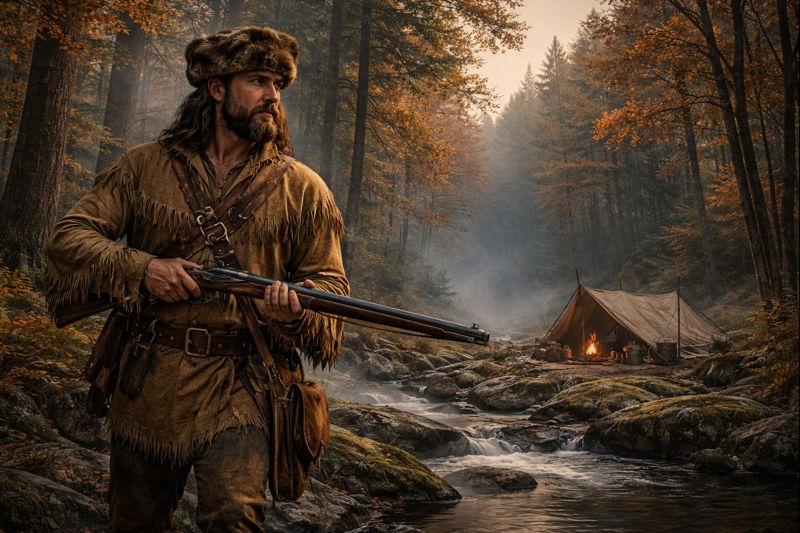
Article image generated by ChatGPT.

One thought on “William Blevins and the Cherokee Nation: A Historical Intersection”